
GUIDE · phdream
Unclaimed top prizes: the missing ticket count matters
“Eight top prizes remain” sounds like a complete fact. It is only a count. To calculate the chance that a randomly selected unsold ticket contains one of those prizes, you would also need to know how many relevant tickets remain unsold—and whether the eight prize tickets are actually among them.
Unclaimed and unsold describe different stages
A ticket can be printed, sold and still awaiting a prize claim. A public count of prizes not yet claimed need not reveal which stage each ticket has reached.
For a concrete primary-source example, the Missouri Lottery’s Scratchers information warns that estimated unclaimed prizes may already have been purchased but not redeemed. This is an example of how a US lottery labels its data, not a statement about availability or rules in the Philippines.
Hold the prize count constant and change the pool
Here are two deliberately simplified inventories. In each, exactly eight top-prize tickets remain unsold. Assume every unsold ticket in that inventory is equally likely to be selected, and that the inventory information is complete.
| Inventory | Unsold top-prize tickets | All unsold tickets | One-ticket probability under the assumptions |
|---|---|---|---|
| A | 8 | 800 | 8 ÷ 800 = 1% |
| B | 8 | 8,000 | 8 ÷ 8,000 = 0.1% |
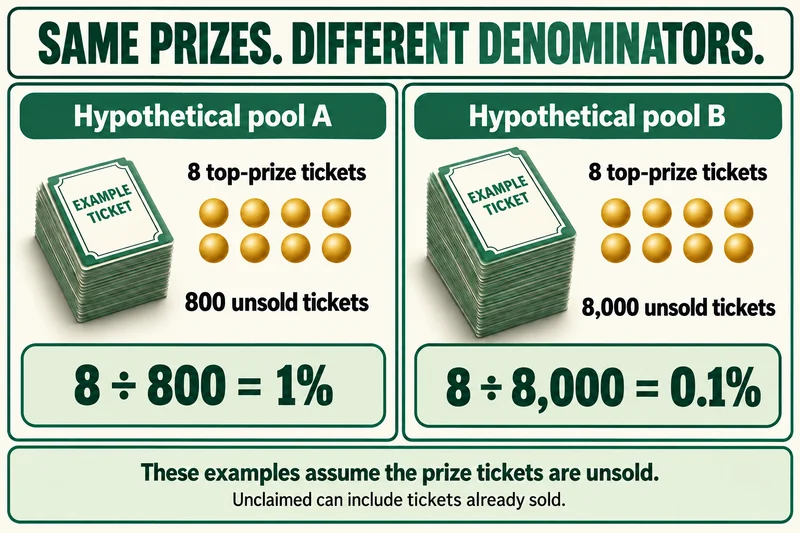
The headline count is identical, but the example probabilities differ by a factor of ten. Neither percentage follows from the phrase “eight unclaimed” alone. Both calculations depend on extra facts that a public remaining-prize table may not provide.
Why the initial print run is not a substitute
Suppose you find the original ticket quantity in an older document. Dividing today’s unclaimed prizes by that original quantity mixes two stages: the current claim count and the starting inventory. It does not reconstruct today’s unsold pool.
Likewise, subtracting claims from prizes originally printed only changes the prize count. It does not tell you how many losing tickets have been sold, where remaining tickets are held, or whether a prize ticket is already in someone’s drawer. These are different missing fields.
Read a remaining-prize page without overclaiming
Save its exact game identifier, the date of the update and the label used for the count. “Estimated”, “unclaimed” and “remaining for sale” should stay in the note rather than disappear into a generic “left” column. If the unsold denominator is unavailable, record it as unavailable. A blank is more accurate than a percentage built from mismatched records.
Our lottery identity worksheet addresses a related source-reading problem: matching the right record before comparing numbers. The bingo and lottery hub covers draw and ticket context, and the phdream overview leads to the other formats.
Source checked 8 October 2026. The two inventories are original teaching examples, not ticket recommendations, forecasts or reported local odds. No tickets were purchased for this article.
AI-assisted source research and original explanation. No gameplay, payments or operator-availability testing was performed. Sources checked 2026-10-08.